Model and Collision Avoidance for Motion Planning of Rigid-Soft Robot With Continuous Expression and Input Mapping
Abstract
This paper presents a motion-planning method for rigid-soft hybrid robots that combines continuous model expression with input mapping to address tracking and collision avoidance. It removes discontinuities and singularities associated with conventional piecewise-constant-curvature models, uses Taylor transformation to obtain a more tractable cable-length-to-end-position relationship, and incorporates data-based input mapping into nonlinear model predictive control to reduce the effect of model mismatch. Robot bodies and obstacles are represented as polyhedra, allowing collision avoidance to be expressed as continuous nonlinear constraints in the NMPC problem. Simulations and experiments on a rigid-soft hybrid robot demonstrate a larger feasible motion region and improved tracking accuracy.

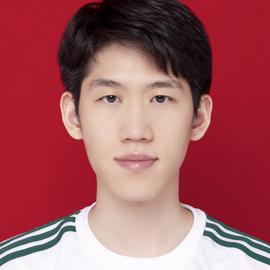
Shaoying HE
PhD Alumnus
Tong Chen
Phd Student
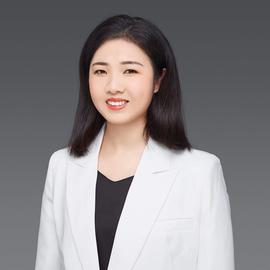
Yunwen XU
Associate Professor
Yunwen Xu is an Associate Professor at the Department of Automation, Shanghai Jiao Tong University. She earned her Ph.D. and M.S. in Control Science and Engineering from Shanghai Jiao Tong University and her B.S. in Automation from Nanjing University of Science and Technology. She was a visiting scholar at Purdue University and has held postdoctoral and research positions at Shanghai Jiao Tong University. Her research focuses on predictive control applications, intelligent transportation systems, robot control, embedded predictive control, and intelligent control of complex systems. She has published extensively in top journals and conferences and has been involved in several significant research projects.
Dewei LI
Professor | Lab Leader
Currently serves as the Director of the Technical Committee on Predictive Control and Intelligent Decision of Chinese Association of Automation, Member of the Control Theory and Applications Education Working Group, and Editorial Member of Control Engineering Practice. He has led over 20 national-level projects, including Key Projects, General Projects and International Cooperation Projects from NSFC, Key Research and Development Programs from MOST. He has also undertaken more than 20 commissioned projects from key enterprises.